
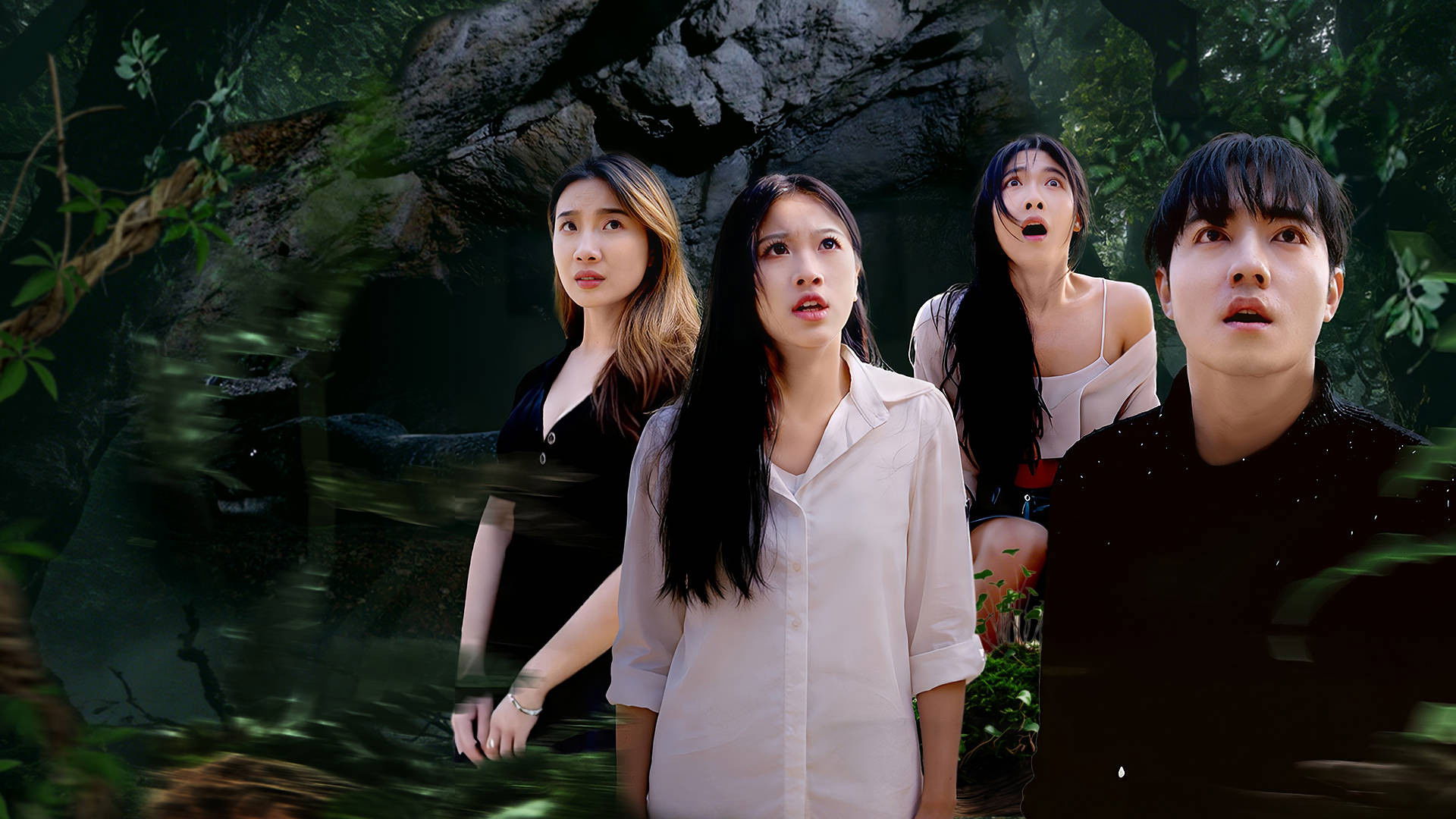

Island Python
After a yacht sinks in a storm by a whale, Lu Ting and others are stranded on a deserted island, where they must survive attacks from a giant python while confronting jealousy, betrayal, and the fight for survival.
PantaOz@PantaOz
Watching Island Python is a traumatic assault on the senses that feels less like entertainment and more like being held hostage by a malfunctioning algorithm programmed to induce despair—a catastrophic failure so absolute that it makes the average smartphone video uploaded by a toddler look like Scorsese by comparison. The acting exists on a KTV scale of 1, where "1" represents the moaning of someone dying of alcohol poisoning in a private karaoke booth at 4 AM, and these "performers" somehow fall below even that basement-floor standard. The actresses appear to have been selected via a casting process that exclusively measured cup size rather than the ability to form human facial expressions, resulting in a parade of damp, heaving cleavages that the camera molests with desperate persistence while the women attached to them attempt to convey "terror" by widening their eyes as if trying to dislodge contact lenses. Director Lu Wei has clearly never spoken to an actual human being about motivation, crafting scenes where grief, lust, and mortal fear are indistinguishable from mild constipation, and asking these models to scream on cue results in noises that sound like a malfunctioning tea kettle being strangled.
The screenplay appears to have been generated by feeding a 1998 Palm Pilot a copy of Anaconda and then smashing it with a hammer until it produced dialogue—every exchange feels like placeholder text left in by accident, delivered by characters whose decision-making abilities suggest severe oxygen deprivation from birth. Characters wander into the python’s maw with the enthusiasm of lemmings on SSRIs, making choices so astronomically stupid that you find yourself actively cheering for the serpent’s digestive system. Speaking of which, the CGI looks like someone animated a plastic pool noodle in Microsoft Paint, then applied a texture filter called "Wet Garbage"—the titular python possesses the detail and menace of a deflated balloon animal from a bankrupt carnival, moving with the physics of a PowerPoint presentation slide transition. This digital catastrophe appears to have been rendered on a fossilised Nokia by animators who have only heard reptiles described in whispered legend by people who have never seen animals.
That this tragedy has been quarantined to the digital leper colony of iQIYI, sparing theatrical audiences from its radioactive incompetence, is the only merciful act in its godforsaken existence. Island Python represents the septic tank of the "wangda" ecosystem—cheap, venal, algorithmically cynically produced sludge that treats viewers like brain-dead addicts desperate for pixelated cleavage and rubber monsters. It is a crime scene where cinema was murdered by incompetence, dressed in a wet tank top, and fed to a digital snake that looks like it was purchased from a street vendor next to counterfeit Pokémon cards. One can only hope Lu Wei’s career follows the survival rate of his characters—swift, brutal, and ending in total consumption—while this python serves as a warning that some content should remain forever buried in the algorithmic void, never to slither into human consciousness again.